

The migration policy debate involves complex issues related to technology, public opinion, and economic factors, all of which significantly influence policy development and migration trends in response to changing global conditions.
The migration policy debate is more relevant than ever, influencing various facets of our society. Have you thought about how these discussions shape daily lives and communities? Let’s dive deeper into the core issues at play.
Understanding migration policy fundamentals
Understanding the fundamentals of migration policy is crucial as it shapes how societies interact with newcomers. This topic explores the basic principles and frameworks that govern migration across countries.
Key Definitions
First, it’s important to define what we mean by migration policy. Migration policy includes laws, regulations, and practices that control the flow of people moving from one country to another. It addresses issues such as who can enter, stay, and leave a country.
Types of Migration Policies
There are various types of migration policies, each serving different purposes. Here are some common types:
- Refugee Policies: Designed to protect individuals fleeing persecution or violence.
- Labor Migration Policies: Allow foreign workers to fill labor shortages.
- Family Reunification Policies: Enable families to reunite across borders.
- Student Visas: Facilitate educational exchanges and opportunities.
Moreover, migration policies can be influenced by social, economic, and political factors. For instance, during times of economic growth, countries may adopt more welcoming policies to attract skilled workers. In contrast, during economic downturns, nations may implement stricter regulations to limit immigration.
It’s also important to recognize that migration policies are not static. They frequently change in response to shifting public opinions, global events, and economic conditions. Understanding these dynamics helps us see why debates about migration remain so heated and complex.
The Role of International Law
International law plays a significant role in shaping migration policies. Treaties and agreements create standards for how countries should treat migrants. These frameworks ensure that migrants are protected, regardless of their legal status.
For example, the 1881 International Convention on Emigration laid the groundwork for modern migration guidelines. Countries that are part of international treaties commit to uphold humane treatment and uphold migrants’ rights.
As we delve deeper into migration policies, remember that these rules reflect not just legal frameworks, but also the values and attitudes of society towards newcomers. The evolution of migration policy continues to shape communities, economies, and individual lives.
The impact of migration on economies
The impact of migration on economies is significant and multifaceted. Understanding how migrants contribute to local economies helps highlight their value in society. Migrants often play crucial roles in various sectors, filling labor shortages and driving economic growth.
Economic Contributions of Migrants
Migrants contribute to economies in numerous ways. They augment the workforce, support businesses, and often pay taxes. Their presence leads to innovations and diverse perspectives. For instance, local businesses benefit from the diverse skills that migrants bring.
- Labor Supply: Migrants fill essential roles in sectors like agriculture, construction, and healthcare.
- Consumer Demand: As migrants earn wages, they spend money, stimulating local businesses.
- Entrepreneurship: Many migrants start their own businesses, contributing to job creation and local economies.
Additionally, the effects of migration extend beyond immediate economic benefits. In many cases, it strengthens community ties and fosters cultural diversity. These aspects enrich the local culture, making communities more vibrant and dynamic. The collaboration among diverse groups often leads to innovative solutions and improved services.
Challenges and Opportunities
However, the impact of migration is not solely positive. Challenges can arise, such as competition for jobs and strain on public services. It’s essential to address these issues through effective policies. Balancing the positive effects of migration with potential challenges requires thoughtful planning and cooperation among various stakeholders.
Efforts to ensure integration and support for both migrants and local populations can drive mutual benefits. Understanding the economic impact of migration allows policymakers to create more inclusive frameworks that leverage the strengths migrants offer. Often, with the right policies, economies can thrive alongside growing populations.
Public opinion and migration policies
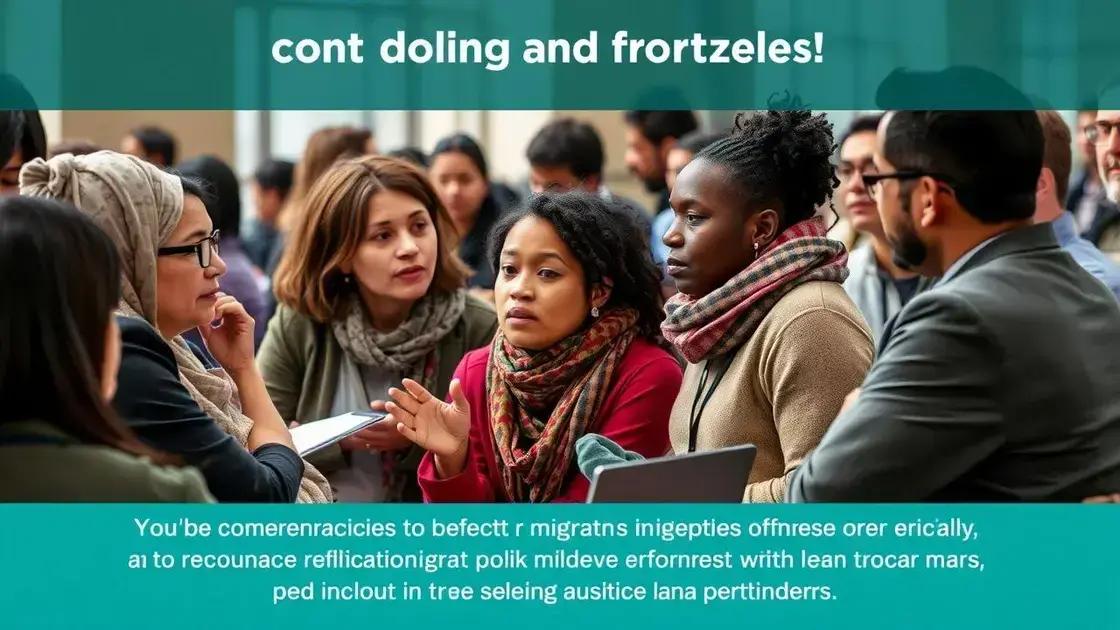
Public opinion significantly shapes migration policies. Understanding how societies perceive migration helps us grasp why certain policies are adopted or rejected. When people hold strong views on migration, these opinions can influence lawmakers and lead to changes in legislation.
Factors Influencing Public Opinion
Several factors play a role in shaping public opinion about migration. These include economic conditions, media portrayal, and personal experiences. For instance, during economic downturns, negative perceptions of migrants can increase, as job competition becomes a key concern.
- Media Coverage: The way news outlets report on migration influences public sentiment. Sensationalized stories can create fear and misinformation.
- Economic Impact: When local economies thrive with the help of migrants, people may view them more positively.
- Community Interactions: Personal connections with migrants can lead to more favorable views. Positive experiences help break down stereotypes.
Moreover, social networks and political rhetoric can amplify certain opinions. Politicians often leverage public sentiments to gain support for stricter or more lenient immigration policies. This makes it essential to understand the pulse of public opinion when discussing migration.
Shifts in Public Perception
Public perceptions can shift over time, often in response to global events or changes in local circumstances. For example, during humanitarian crises, there may be an increase in sympathy toward refugees. This might lead to more supportive migration policies and public programs.
Conversely, periods filled with high-profile incidents involving migrants can create backlash. Such situations can alter public perception and lead to calls for tougher immigration controls. Understanding this dynamic is crucial for policymakers who want to create balanced and effective migration policies.
Political divides in migration policy
Political divides in migration policy are evident across many nations. Understanding these divides helps clarify how different groups approach the topic of migration. Politics often fuels strong opinions and policies that reflect various ideological beliefs regarding immigration.
Key Political Perspectives
Different political parties and groups have diverse views on migration. Generally, liberal parties tend to support more open migration policies, advocating for humanitarian aid and inclusion. In contrast, conservative parties often prioritize border security and stricter immigration laws. This fundamental difference creates significant debates on achieving balanced policies.
- Liberal View: Emphasizes integration and refugee support, viewing migrants as contributors to society.
- Conservative View: Focuses on national security and economic stability, advocating for limited immigration.
- Centrist Approaches: Seek to find a middle ground, advocating for controlled and fair immigration processes.
Debates can also become heated during election cycles, as candidates leverage migration policy to garner support. The rhetoric surrounding migration often becomes polarized, leading to misinformation and heightened tensions between opposing sides.
Public Impact and Policy Outcomes
These political divides have real-world consequences for migrants and the communities they join. In many cases, strict policies may lead to uncertainty and fear among migrant populations. On the other hand, more inclusive policies can foster community growth and economic contributions from migrants.
Understanding how political views shape migration policy is essential for creating fair and effective frameworks. Addressing these divisions through informed dialogue can lead to comprehensive solutions that consider both humanitarian needs and national interests.
Future trends in migration debates
Future trends in migration debates are evolving as societies and economies change. As globalization increases, migration discussions become more complex. New factors are reshaping how we think about migration and the policies that govern it.
Technological Influences
Technology is playing a significant role in shaping future migration trends. Digital communication tools allow migrants to connect quickly with family and communities back home. This connectivity often influences migration patterns and public opinion. Furthermore, innovations in tracking migration data help governments understand these movements better.
- Data Analysis: Utilizing big data assists in forecasting migration flows and understanding trends.
- Virtual Work: Remote work opportunities enable people to live in one country while working for companies in another.
- Social Media: Migrants use social media to share experiences, impacting perceptions and policies.
Moreover, the impact of climate change continues to rise on the migration agenda. As natural disasters become more frequent, we can expect more people to migrate in search of safety and stability. This phenomenon shapes not only the debates around migration but also humanitarian responses.
Changing Economic Landscapes
Economic shifts also influence migration patterns. In developed countries, aging populations lead to labor shortages. Countries may seek migrants to fill essential roles in various sectors. Emerging economies may attract migrants looking for opportunities, changing traditional migration routes.
Policy reform is vital to adapt to these changes. As communities witness shifts in demographics, creating inclusive migration policies ensures social harmony. Balancing economic needs with humanitarian concerns becomes increasingly important in shaping future migration debates.
As discussions continue, the role of public opinion will not diminish. Engaging communities in these conversations will help establish inclusive dialogue, leading to more effective and equitable policies. The future of migration depends on how we address these intersections between technology, economy, and human rights.
FAQ – Frequently Asked Questions about Migration Policies
How do technology advancements affect migration?
Technology plays a crucial role by improving communication among migrants and providing data analysis for predicting migration patterns.
What economic factors influence migration trends?
Economic shifts, such as labor shortages in developed countries, lead to increased demand for migrant workers in various sectors.
Why is public opinion important in migration debates?
Public opinion shapes migration policies, and engaging communities ensures that policies reflect a broader range of perspectives.
How does climate change impact migration?
Climate change increases the frequency of natural disasters, forcing people to migrate in search of safety and stability.