

Youth civic engagement is the active participation of young people in their communities, driving social change and influencing decision-making, despite challenges such as resource limitations and societal barriers.
Youth civic engagement is crucial for building vibrant communities. Ever wondered how young voices can influence change? Let’s explore its significance and impact!
Understanding youth civic engagement
Understanding youth civic engagement is key to recognizing how young people contribute to their communities. When youth participate, they bring fresh ideas and perspectives. This engagement is crucial for creating positive changes.
One important aspect of youth civic engagement is involving them in local decision-making. Young people can speak up about issues that matter to them, like education, environment, and social justice. Their voices can shape policies and promote community improvement.
Why is youth engagement essential?
Youth civic engagement fosters a sense of belonging. When young individuals feel valued, they are more likely to stay involved. Here are a few reasons why this participation matters:
Participating in civic activities also allows youth to develop their identities. As they engage, they learn about social responsibilities and develop empathy for others. Exposure to diverse viewpoints can broaden their understanding of the world.
Moreover, organizations that support youth in civic engagement provide resources and mentorship. This support is vital in helping young people navigate their roles in activism and community leadership.
Examples of youth engagement
Many young people are making a difference through initiatives and programs that encourage civic involvement. These activities may include:
Through these actions, young individuals can voice their concerns effectively, proving they have the power to influence change.
In summary, understanding youth civic engagement not only emphasizes their importance in society but also highlights the potential for positive change. When young people engage, they uplift their communities and create a brighter future.
The impact of civic involvement on communities
The impact of civic involvement on communities is profound and far-reaching. When individuals engage in civic activities, they contribute to a sense of belonging and responsibility. This involvement can lead to stronger, more resilient communities.
One major effect of civic engagement is improved local services. When community members actively participate in meetings and discussions, their voices are heard. They can influence the development of programs that meet their specific needs.
Benefits of civic involvement
Civic engagement fosters numerous benefits for both individuals and communities. Here are some key impacts:
Moreover, when individuals work together for a common goal, they build trust and solidarity. This collaboration can enhance public safety and create a supportive environment where everyone feels valued.
Furthermore, civic involvement can lead to economic improvements. Engaged citizens often advocate for local business support, promoting economic development and job creation. As communities thrive, residents benefit from increased opportunities.
Real-world examples
Across the globe, examples abound of how civic involvement has transformed communities. Local initiatives tackling environmental issues have led to cleaner neighborhoods. Youth programs aimed at educational support have increased graduation rates. Moreover, community gardens foster food security and bring people together.
Through these efforts, citizens not only address pressing concerns but also inspire future generations. The positive outcomes of civic engagement ripple throughout society, showcasing the power of collective action.
Ways to promote youth participation
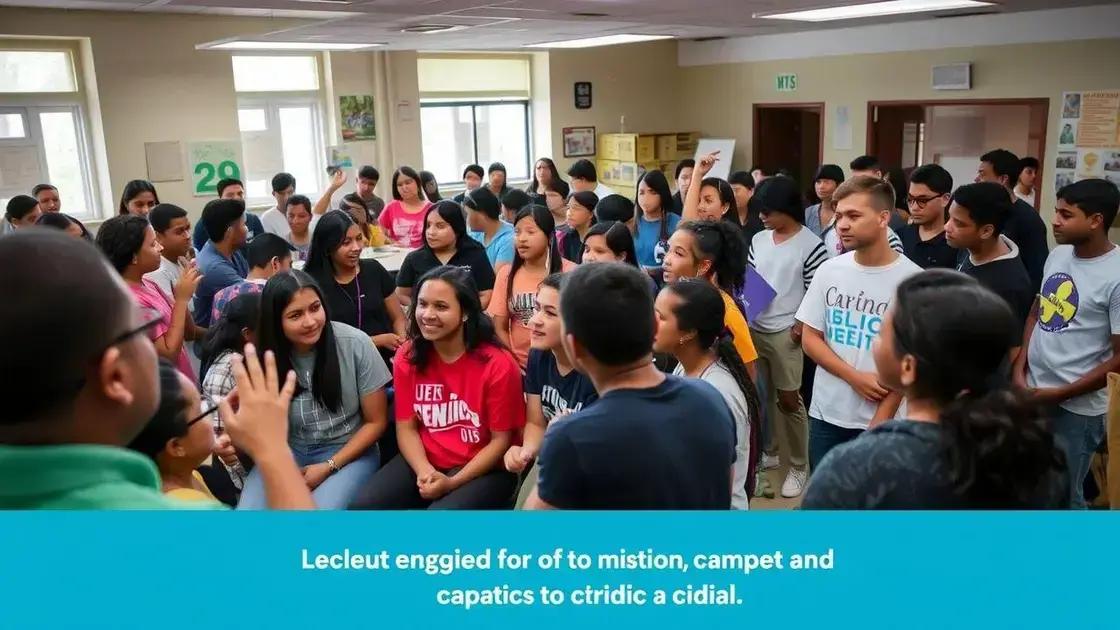
Ways to promote youth participation can significantly enhance civic engagement. Encouraging young people to get involved is essential for fostering a sense of community and responsibility. By implementing various strategies, communities can inspire the next generation to take action.
One effective method is to create platforms for youth voices. Open forums allow young people to share their ideas and concerns about local issues. This participation helps them feel valued and more connected to their communities.
Engaging activities
Offering engaging activities is crucial to attracting youth participation. Here are some activities that can spark interest:
Providing opportunities for young individuals to collaborate fosters teamwork and builds lasting friendships. These connections can motivate them to continue participating in civic activities.
Additionally, educational institutions can play a vital role. Schools can implement programs that emphasize civic knowledge and responsibility. For example, incorporating service-learning into the curriculum helps students learn the importance of community involvement while gaining practical experience.
Leveraging technology
In today’s digital age, technology is a powerful tool for promoting civic engagement. Online platforms can facilitate discussions and mobilize young people. Social media campaigns can raise awareness and motivate peers to become active in their communities.
Moreover, creating apps or websites that connect youth with local opportunities can make it easier for them to get involved. These platforms can also showcase success stories, encouraging others to join in the efforts.
By using a combination of these methods, communities can successfully promote youth participation. When young voices are heard and valued, the impact on society can be profound and lasting.
Success stories of youth-led initiatives
Success stories of youth-led initiatives highlight the incredible potential young people have to create change in their communities. These stories inspire future generations and demonstrate that youth can be effective leaders.
One remarkable example is the rise of environmental clubs in schools. These clubs empower students to advocate for sustainability within their communities. They often initiate recycling programs, clean-up drives, and tree planting events. Through their efforts, many schools have seen a substantial increase in community awareness of environmental issues.
Impactful initiatives
Across the globe, youth-led initiatives are addressing social challenges. Here are a few impactful projects:
These initiatives not only support important causes but also teach participants valuable skills. Young leaders learn organization, teamwork, and communication skills, all while making a difference.
Another inspiring story comes from a group of teenagers who organized a local affordable housing campaign. They collaborated with community leaders to raise awareness about the housing crisis. Their efforts led to the creation of new policies that helped families secure homes.
Encouraging community involvement
Success stories like these show the impact that engaged youth can have. By leading initiatives, young people encourage others to join in their efforts, building a culture of civic participation. This ripple effect can change perceptions, rallying support for critical issues.
Moreover, recognizing and celebrating these accomplishments is essential. Awards and public recognition can motivate young leaders. When communities celebrate their achievements, it fosters greater participation and strengthens the bond among community members.
Through these stories, we see how youth can transform challenges into opportunities. Their determination and creativity pave the way for a brighter future.
Challenges faced by young activists
Challenges faced by young activists are numerous and can often be overwhelming. Despite their passion and energy, young people encounter various obstacles when trying to instigate change in their communities.
One significant challenge is the lack of resources. Many young activists struggle to find funding or support for their initiatives. This issue can limit their ability to conduct projects or campaigns effectively.
Barriers to engagement
Young activists also face barriers from societal perceptions. Often, their ideas may be dismissed simply due to their age. Adults may assume that young people lack the experience or knowledge required to contribute valuable insights. This mentality can discourage young individuals from voicing their opinions.
Moreover, young activists may encounter resistance from established organizations. These groups might be hesitant to collaborate or share power, fearing that their authority could be undermined. This reluctance can hinder the effectiveness of youth-led initiatives.
Emotional and mental stress
The emotional toll on young activists is often significant. Many deal with feelings of frustration, isolation, and burnout. Balancing activism with school or work can be incredibly demanding. Support from peers and mentors is vital to help them navigate these emotional challenges.
Additionally, the digital landscape presents its own issues. With the prevalence of social media, young activists can encounter online harassment or criticism. Negative comments can be disheartening and make them question their efforts.
Despite these challenges, many young activists continue to persevere. Their resilience and dedication can drive progress and inspire others. By understanding and addressing these barriers, communities can better support youth engagement.
FAQ – Frequently Asked Questions About Youth Civic Engagement
What is youth civic engagement?
Youth civic engagement refers to the active participation of young people in their communities, advocating for social change and influencing decision-making.
What challenges do young activists face?
Young activists often face challenges such as lack of resources, dismissal of their ideas due to age, and emotional stress from balancing activism with other responsibilities.
How can communities support youth participation?
Communities can support youth participation by providing resources, creating platforms for youth voices, and recognizing their efforts through awards and public acknowledgment.
Why is youth involvement important for communities?
Youth involvement is important because it brings fresh perspectives, fosters a culture of civic responsibility, and inspires future generations to engage in social issues.